How Long Does It Take for Reviews to Combin After Adding to a Parent
The git rebase control has a reputation for beingness magical Git voodoo that beginners should stay away from, simply it tin actually make life much easier for a development team when used with care. In this commodity, we'll compare git rebase with the related git merge control and identify all of the potential opportunities to incorporate rebasing into the typical Git workflow.
Conceptual Overview
The start affair to empathize most git rebase is that it solves the aforementioned problem equally git merge. Both of these commands are designed to integrate changes from 1 co-operative into some other branch—they merely exercise it in very different ways.
Consider what happens when yous starting time working on a new feature in a dedicated branch, then another squad member updates the principal branch with new commits. This results in a forked history, which should be familiar to anyone who has used Git as a collaboration tool.
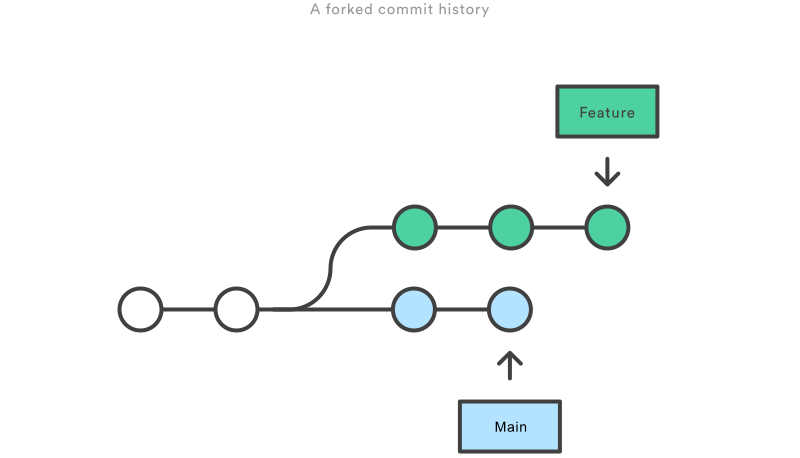
Now, let's say that the new commits in main are relevant to the characteristic that you're working on. To incorporate the new commits into your characteristic branch, you have two options: merging or rebasing.
The Merge Option
The easiest selection is to merge the master branch into the feature branch using something like the following:
            git checkout characteristic
git merge principal
Or, you can condense this to a ane-liner:
This creates a new "merge commit" in the feature co-operative that ties together the histories of both branches, giving you a branch structure that looks like this:
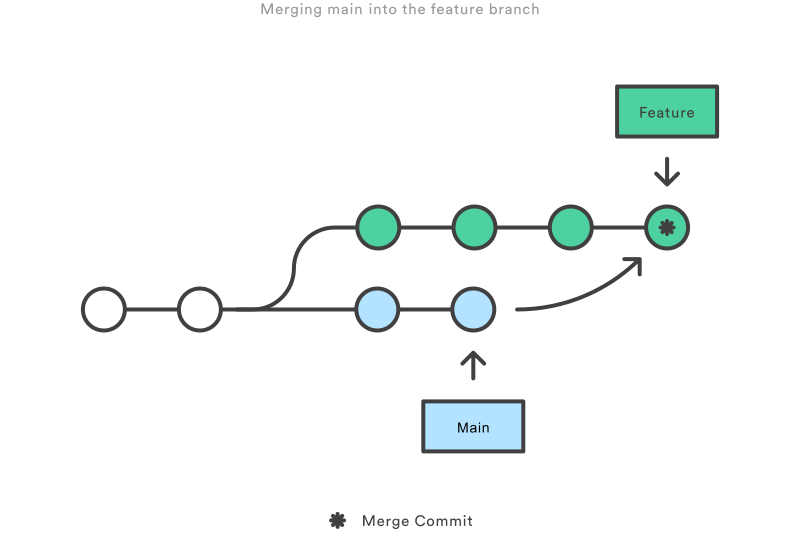
Merging is overnice because it's a non-destructive functioning. The existing branches are non changed in any manner. This avoids all of the potential pitfalls of rebasing (discussed below).
On the other hand, this also ways that the feature branch will have an extraneous merge commit every fourth dimension you lot need to contain upstream changes. If main is very agile, this can pollute your feature branch's history quite a chip. While it's possible to mitigate this upshot with advanced git log options, it can make information technology hard for other developers to understand the history of the projection.
The Rebase Pick
Every bit an alternative to merging, you lot can rebase the characteristic co-operative onto primary branch using the post-obit commands:
            git checkout feature
git rebase main
This moves the entire characteristic branch to begin on the tip of the main co-operative, effectively incorporating all of the new commits in main. Only, instead of using a merge commit, rebasing re-writes the projection history by creating make new commits for each commit in the original branch.
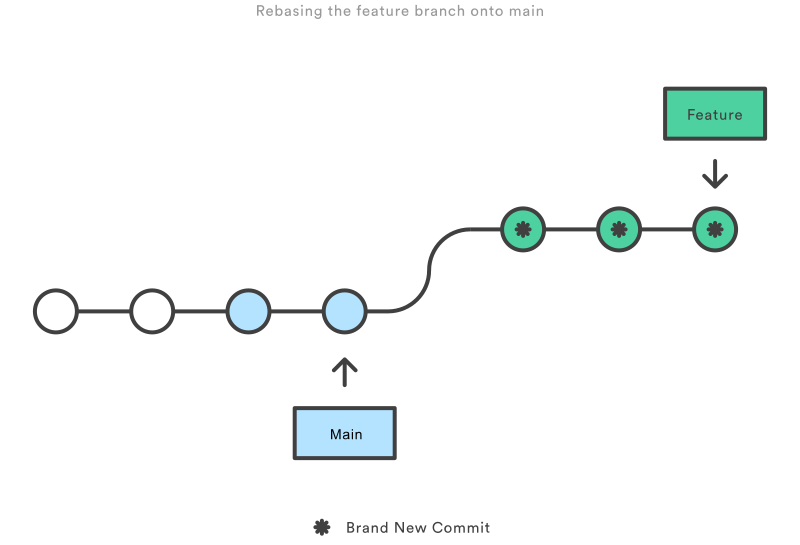
The major benefit of rebasing is that you get a much cleaner project history. First, information technology eliminates the unnecessary merge commits required by git merge. 2d, as you lot can see in the above diagram, rebasing likewise results in a perfectly linear projection history—you can follow the tip of characteristic all the way to the starting time of the project without any forks. This makes it easier to navigate your projection with commands like git log, git bifurcate, and gitk.
But, there are two trade-offs for this pristine commit history: condom and traceability. If you don't follow the Golden Rule of Rebasing, re-writing project history can be potentially catastrophic for your collaboration workflow. And, less importantly, rebasing loses the context provided by a merge commit—y'all can't see when upstream changes were incorporated into the feature.
Interactive Rebasing
Interactive rebasing gives you the opportunity to modify commits as they are moved to the new co-operative. This is even more powerful than an automated rebase, since information technology offers consummate command over the branch's commit history. Typically, this is used to make clean up a messy history before merging a feature co-operative into main.
To brainstorm an interactive rebasing session, pass the i selection to the git rebase command:
            git checkout characteristic
git rebase -i main
This volition open a text editor listing all of the commits that are almost to exist moved:
            pick 33d5b7a Message for commit #one
choice 9480b3d Message for commit #two
selection 5c67e61 Bulletin for commit #3
This listing defines exactly what the branch will look like after the rebase is performed. Past changing the option command and/or re-ordering the entries, you can make the branch'due south history look like whatever yous desire. For case, if the second commit fixes a small-scale problem in the 1st commit, y'all can condense them into a unmarried commit with the fixup command:
            choice 33d5b7a Bulletin for commit #1
fixup 9480b3d Message for commit #2
choice 5c67e61 Message for commit #3
When you save and close the file, Git will perform the rebase according to your instructions, resulting in project history that looks similar the following:
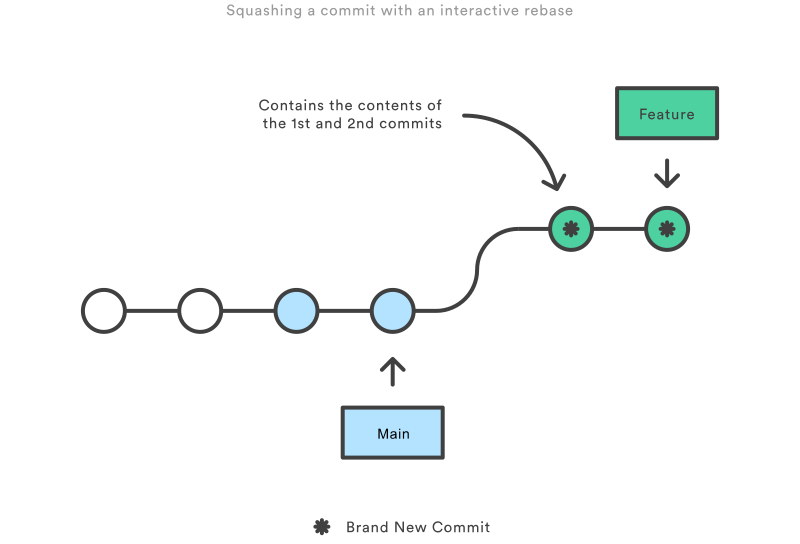
Eliminating insignificant commits similar this makes your feature'southward history much easier to understand. This is something that git merge simply cannot practice.
The Golden Rule of Rebasing
Once yous understand what rebasing is, the most important thing to learn is when not to do it. The golden rule of git rebase is to never use it on public branches.
For example, recall about what would happen if you rebased primary onto your feature branch:
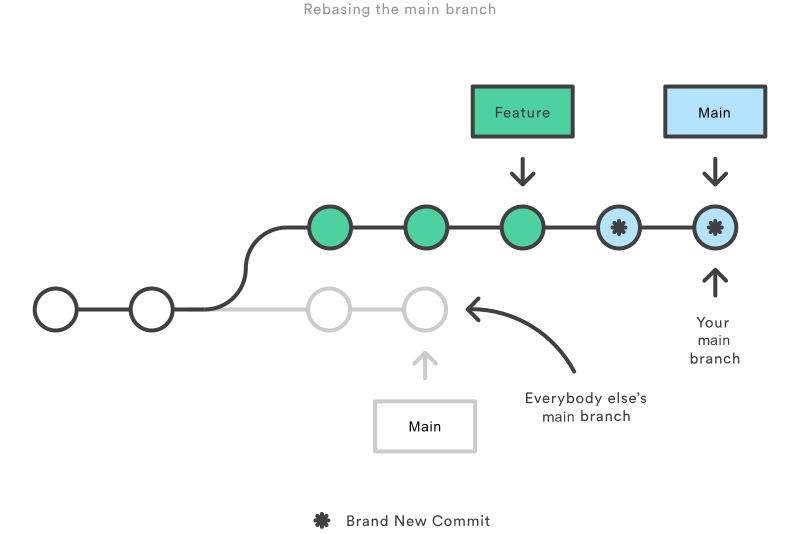
The rebase moves all of the commits in principal onto the tip of feature. The problem is that this only happened in your repository. All of the other developers are even so working with the original master. Since rebasing results in brand new commits, Git will remember that your main branch's history has diverged from everybody else'south.
The only way to synchronize the two main branches is to merge them back together, resulting in an extra merge commit and ii sets of commits that contain the same changes (the original ones, and the ones from your rebased co-operative). Needless to say, this is a very confusing situation.
So, before yous run git rebase, always inquire yourself, "Is anyone else looking at this branch?" If the answer is yeah, accept your hands off the keyboard and offset thinking well-nigh a non-destructive mode to make your changes (e.1000., the git revert command). Otherwise, you're safe to re-write history as much every bit you like.
Force-Pushing
If yous endeavor to push the rebased master co-operative dorsum to a remote repository, Git will prevent you from doing so because it conflicts with the remote main branch. But, you can force the push to go through by passing the --force flag, like and then:
# Be very careful with this command! git button --force This overwrites the remote main co-operative to match the rebased one from your repository and makes things very disruptive for the rest of your team. So, be very careful to apply this command but when you know exactly what y'all're doing.
One of the simply times you should be force-pushing is when y'all've performed a local cleanup later on you lot've pushed a private feature branch to a remote repository (e.g., for backup purposes). This is like saying, "Oops, I didn't really want to push that original version of the feature branch. Take the current one instead." Again, information technology's important that nobody is working off of the commits from the original version of the feature co-operative.
Workflow Walkthrough
Rebasing can be incorporated into your existing Git workflow as much or as petty equally your squad is comfortable with. In this section, we'll take a look at the benefits that rebasing tin can offer at the various stages of a feature'due south development.
The outset step in any workflow that leverages git rebase is to create a dedicated branch for each characteristic. This gives y'all the necessary branch structure to safely utilize rebasing:
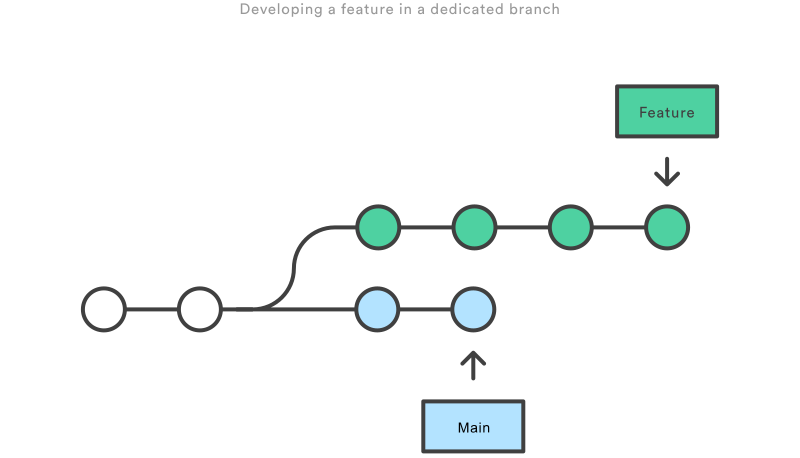
Local Cleanup
One of the best ways to incorporate rebasing into your workflow is to clean up local, in-progress features. Past periodically performing an interactive rebase, you tin brand certain each commit in your feature is focused and meaningful. This lets you write your code without worrying most breaking it upwards into isolated commits—you can prepare it up after the fact.
When calling git rebase, you lot have two options for the new base of operations: The characteristic's parent branch (eastward.grand., main), or an earlier commit in your feature. We saw an instance of the first option in the Interactive Rebasing department. The latter option is overnice when yous only need to set up the concluding few commits. For example, the following command begins an interactive rebase of but the last iii commits.
git checkout feature git rebase -i HEAD~3 Past specifying Caput~iii as the new base of operations, you lot're non actually moving the branch—you're just interactively re-writing the 3 commits that follow it. Note that this will not incorporate upstream changes into the characteristic branch.
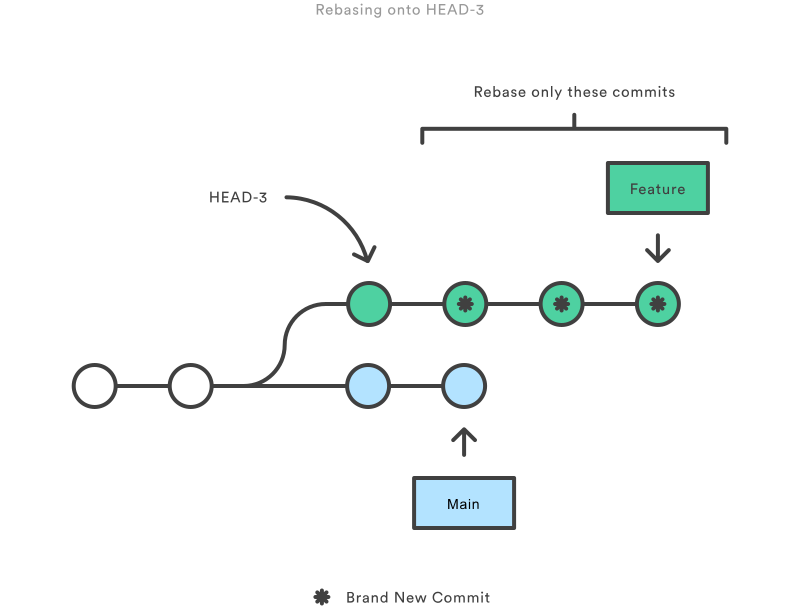
If yous want to re-write the entire feature using this method, the git merge-base of operations command can be useful to discover the original base of the feature branch. The following returns the commit ID of the original base, which you lot can then laissez passer to git rebase:
git merge-base characteristic main This employ of interactive rebasing is a great way to introduce git rebase into your workflow, as it just affects local branches. The merely thing other developers volition see is your finished product, which should be a clean, easy-to-follow characteristic co-operative history.
But once again, this only works for private feature branches. If you're collaborating with other developers via the aforementioned feature branch, that branch is public, and you're not immune to re-write its history.
At that place is no git merge alternative for cleaning upwardly local commits with an interactive rebase.
Incorporating Upstream Changes Into a Feature
In the Conceptual Overview section, nosotros saw how a feature branch can comprise upstream changes from main using either git merge or git rebase. Merging is a safe option that preserves the entire history of your repository, while rebasing creates a linear history past moving your feature branch onto the tip of main.
This apply of git rebase is similar to a local cleanup (and tin be performed simultaneously), but in the process it incorporates those upstream commits from main.
Keep in heed that information technology's perfectly legal to rebase onto a remote co-operative instead of principal. This can happen when collaborating on the same feature with another developer and you need to incorporate their changes into your repository.
For case, if yous and another developer named John added commits to the characteristic branch, your repository might look similar the following after fetching the remote characteristic branch from John'due south repository:
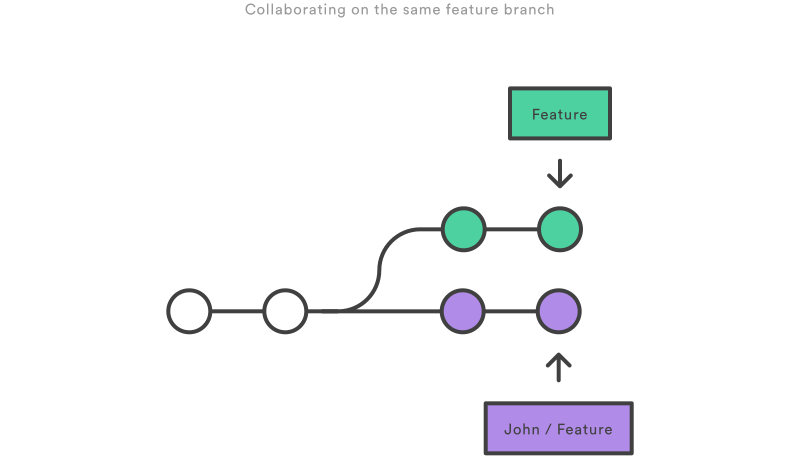
Yous can resolve this fork the exact same style every bit y'all integrate upstream changes from main: either merge your local feature with john/feature, or rebase your local feature onto the tip of john/characteristic.
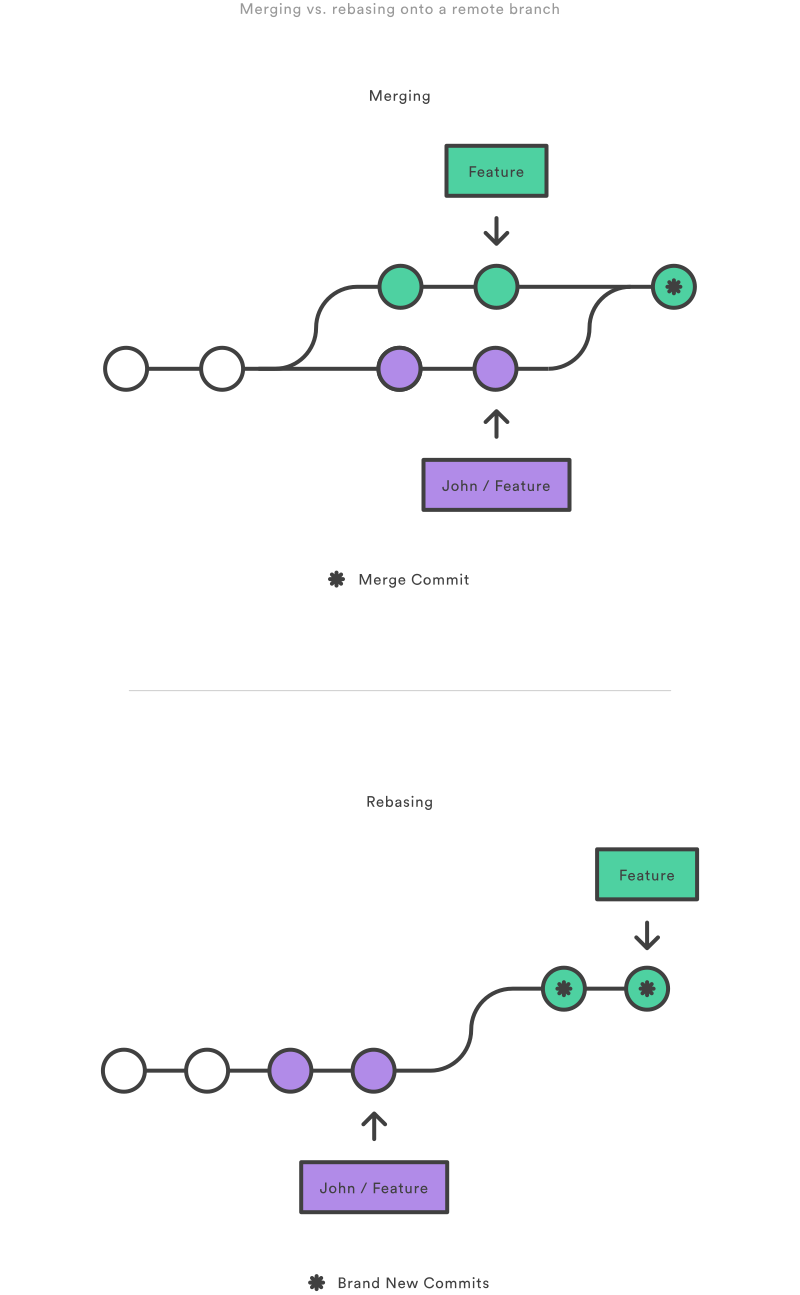
Note that this rebase doesn't violate the Aureate Rule of Rebasing because only your local feature commits are being moved—everything before that is untouched. This is similar saying, "add my changes to what John has already done." In almost circumstances, this is more intuitive than synchronizing with the remote branch via a merge commit.
Past default, the git pull command performs a merge, only you can forcefulness it to integrate the remote branch with a rebase by passing information technology the --rebase selection.
Reviewing a Feature With a Pull Asking
If you use pull requests equally part of your lawmaking review procedure, yous need to avert using git rebase after creating the pull request. As soon every bit you brand the pull request, other developers will be looking at your commits, which means that it's a public branch. Re-writing its history volition make it impossible for Git and your teammates to track any follow-upwardly commits added to the characteristic.
Any changes from other developers need to be incorporated with git merge instead of git rebase.
For this reason, it's usually a good idea to make clean upwardly your code with an interactive rebase before submitting your pull request.
Integrating an Approved Characteristic
Afterward a feature has been approved by your team, you take the option of rebasing the feature onto the tip of the main branch before using git merge to integrate the characteristic into the master code base.
This is a like situation to incorporating upstream changes into a feature branch, but since y'all're not allowed to re-write commits in the main branch, yous take to somewhen use git merge to integrate the characteristic. Nevertheless, by performing a rebase earlier the merge, you're assured that the merge will be fast-forwarded, resulting in a perfectly linear history. This also gives you lot the take a chance to squash any follow-up commits added during a pull request.
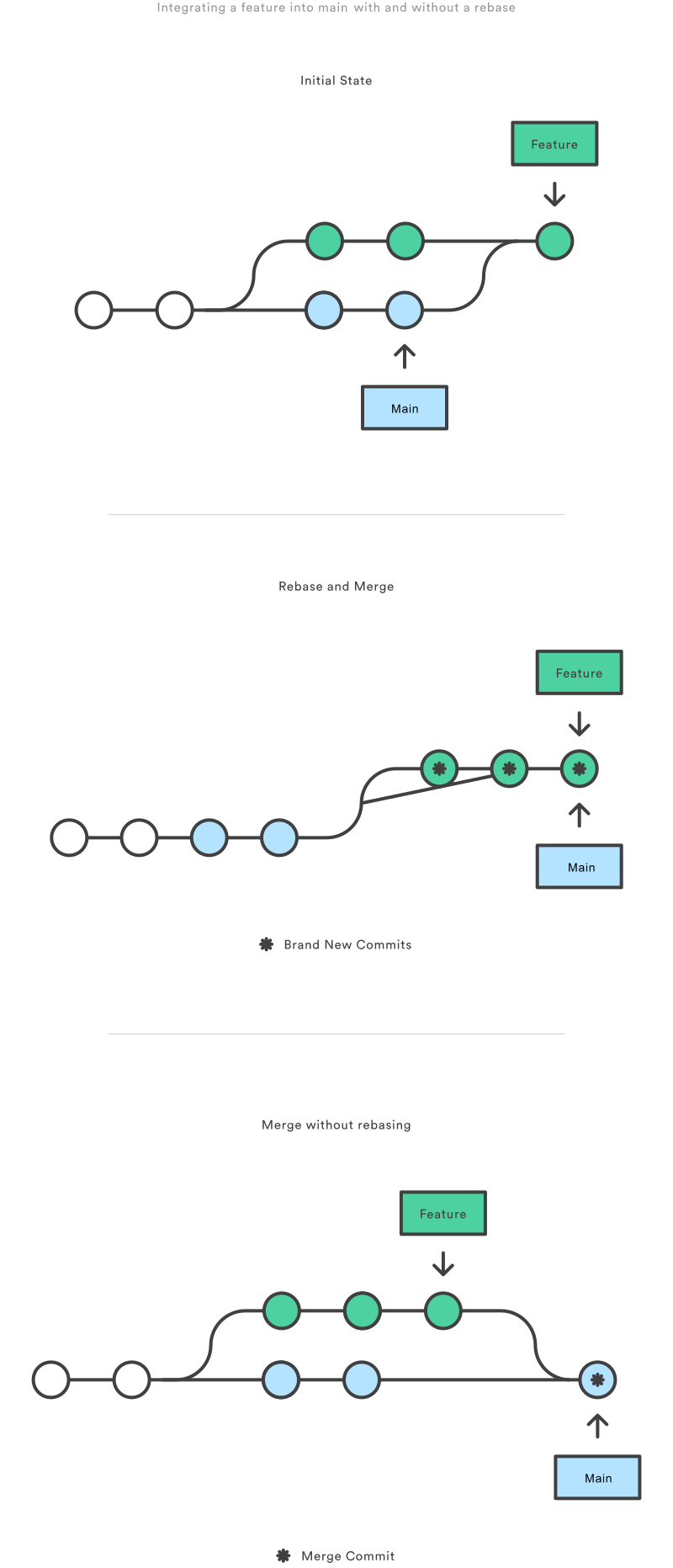
If you're non entirely comfortable with git rebase, y'all can always perform the rebase in a temporary branch. That fashion, if yous accidentally mess up your feature's history, you can check out the original branch and try again. For example:
            git checkout feature
git checkout -b temporary-branch
git rebase -i principal
# [Clean upward the history]
git checkout master
git merge temporary-branch
Summary
And that's all you really need to know to start rebasing your branches. If yous would adopt a clean, linear history free of unnecessary merge commits, you should reach for git rebase instead of git merge when integrating changes from another branch.
On the other paw, if you want to preserve the complete history of your project and avoid the risk of re-writing public commits, you tin stick with git merge. Either option is perfectly valid, but at least at present you take the option of leveraging the benefits of git rebase.
Source: https://www.atlassian.com/git/tutorials/merging-vs-rebasing
0 Response to "How Long Does It Take for Reviews to Combin After Adding to a Parent"
Post a Comment